Free download
Sean O’Neill’s Hiring Debrief Template
 Sean O'Neill· CPTO at Syncron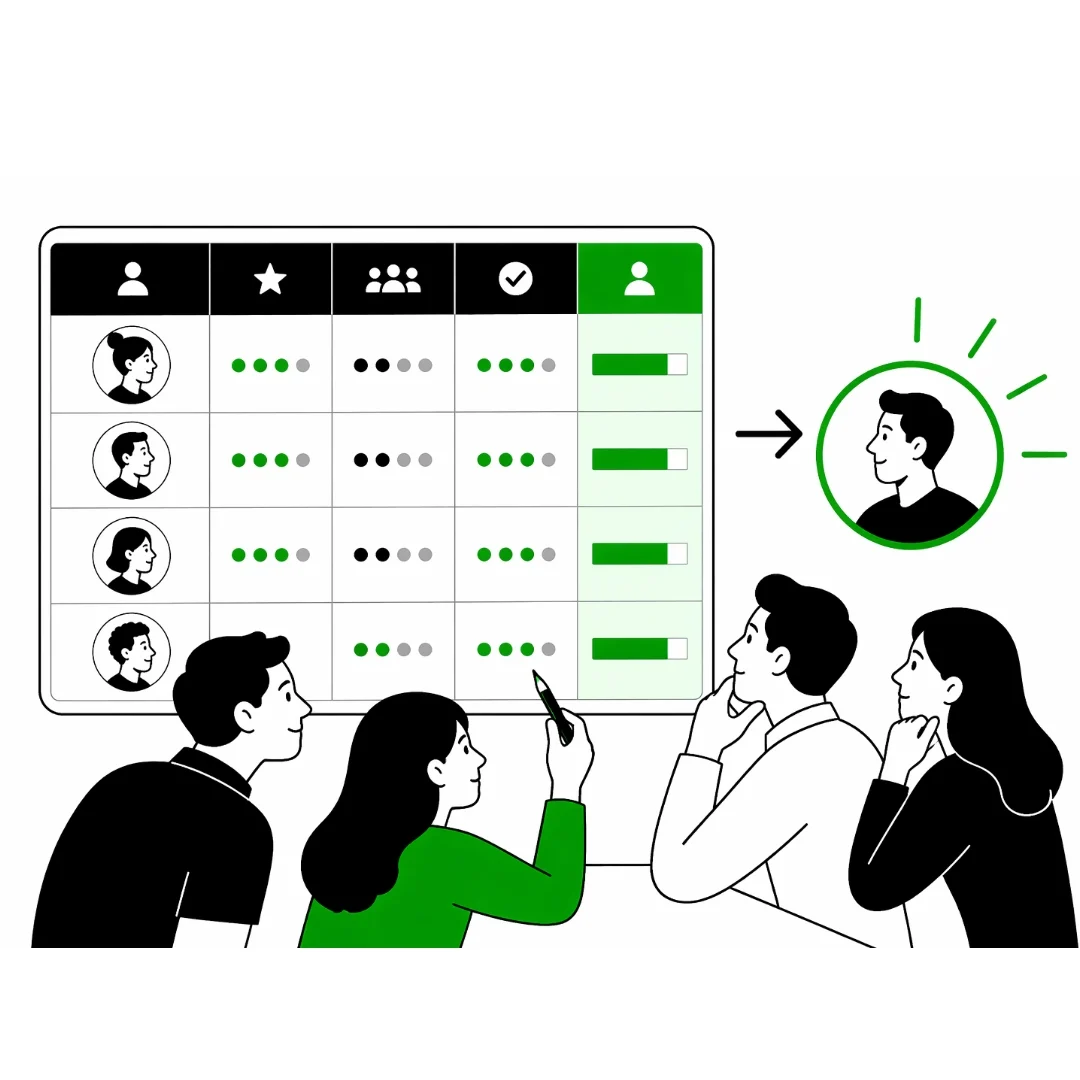
What you get
Capture interview feedback, run blind voting and compare candidates in a structured debrief that reduces bias and improves hiring decisions.
Web link
Open the tool
No sign-up. No email. Opens straight away.
Share on LinkedIn
About this tool
Most hiring decisions don’t fail in the interview. They fail in the discussion afterwards.
This is the hiring debrief template Sean O’Neill has used throughout his career to help teams make clear, evidence-based hiring decisions. Sean spent 11 years at Amazon as part of the Bar Raiser programme, where the focus wasn’t just on running good interviews; it was on making consistently high-quality hiring decisions across the business.
This tool brings that same structure into your hiring process.
What it helps you do
- Capture structured feedback from each interviewer;
- Score candidates against defined criteria;
- Run blind voting before the debrief to reduce bias;
- Compare perspectives across the interview panel;
- Focus the discussion on evidence, not opinion;
- Rank multiple candidates clearly; and
- Make confident hiring decisions.
How it works
Each interviewer completes their assessment independently before the debrief.
Those inputs are then compiled and revealed in the debrief, creating a structured conversation where the team can challenge assumptions, share evidence, and reach a clear decision.
No guesswork. No loudest voice wins. No “on the fence”.
Why it matters
Hiring is the highest-leverage decision you make as a leader. This template helps you raise the bar by turning a collection of interview impressions into a structured, repeatable decision process. If you hire people, lead teams, or want to improve how your organisation makes hiring decisions, this simple tool will immediately upgrade your process.
Where it came from
The episode behind this tool
Hiring Masterclass: The Debrief
Why the interview debrief matters more than the interview itself: Sean O'Neill on blind voting, avoiding groupthink, and making the final call.
47 mins12 May 2026
Listen or watch
Who wrote it
Sean O'Neill
CPTO at Syncron
Sean O’Neill shares practical insights on recruitment, leadership and building high-performing teams. Learn how great hiring decisions create stronger organisations.
More on Hiring and Talent and Teams and Culture
Other tools covering the same ground.

The Hidden Leaders In Your Workforce
Recognise and support carers at work: the challenges they face, the leadership strengths they bring, and what employers can actually do.
 Kirsten HurleyPDF · 1.4 MB
The Interview Cheatsheet
Real interview questions, model answers and hiring insight; for candidates preparing and managers who want to run better interviews.
 Sam GrillPDF · 2.2 MB
The Manual of “Us”
Tom Day’s template for aligning a team before a project starts: roles, objectives, values, ways of working and what success actually looks like.
 Tom DayPDF · 442 KB