55 mins7 July 20262 free tools
Have the Conversation You’re Avoiding
The Manual of “Me” and “Us”: getting ahead of friction before it becomes conflict.
What you’ll learn
- Why we instinctively avoid difficult conversations, and why delaying them almost always makes things worse.
- How to recognise when it’s time to have a difficult conversation instead of hoping the problem disappears.
- A simple framework for preparing before you tackle a sensitive conversation.
- How to be honest without damaging trust or relationships.
- Why understanding the facts before speaking is essential for fair and balanced conversations.
- How openness and vulnerability can encourage others to communicate more honestly.
- The difference between sharing enough and oversharing in the workplace.
- How Tom’s Manual of Me helps colleagues understand your working style, strengths, and personal pressures.
- How the Manual of Us creates team alignment and prevents conflict before it starts.
- Practical ways to build a culture where difficult conversations become normal, constructive, and far less intimidating.
The free tools from this episode
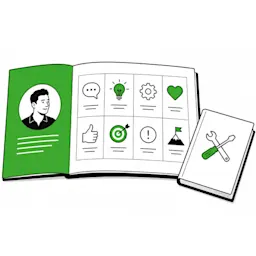
The Manual of “Me”
Tom Day’s template for telling your team how you work: strengths, communication preferences and motivations. Build trust before conflict starts.

The Manual of “Us”
Tom Day’s template for aligning a team before a project starts: roles, objectives, values, ways of working and what success actually looks like.
About the guest

Tom Day
Partner, PA Consulting
Tom Day is a Partner at PA Consulting, where he helps organisations solve complex problems through innovation. Over more than 25 years, he has worked across consumer goods, financial services, retail and government, leading teams through uncertainty and change. Outside work, he’s an endurance athlete, obstacle course racer, and someone who believes that most conflict can be prevented through better communication.
Episode summary
In this episode, Jeremy talks to Tom Day, Partner at PA Consulting, about difficult conversations: the ones we avoid, delay, overthink, and often leave until the damage is already done.
Tom has spent more than 25 years working across consulting, innovation, client delivery, and team leadership. He describes himself as someone who likes to “build cool things for cool people”, and that energy comes through in the conversation. But underneath the humour and pace is a serious message: most conflict does not appear from nowhere. It builds slowly when people fail to say what needs to be said.
The episode explores why difficult conversations feel so uncomfortable. Tom defines them simply as any conversation that gives you “butterflies in the stomach”, whether that is giving feedback at work, raising a problem with a client, talking to a builder, or having an awkward conversation with your children. His advice is clear: the longer you leave it, the worse it gets.
Tom compares an avoided conversation to leaving a splinter in your hand. Deal with it early, and it is uncomfortable but manageable. Ignore it, and it becomes infected, painful, and much harder to fix. The same is true in teams, families, and client relationships.
A major theme of the episode is preparation. Tom is clear that you should not simply “barrel in” with one side of the story. You need the facts, a balanced view, and a human approach. Difficult conversations are emotional because they involve people’s behaviour, performance, trust, and pride.
Rather than rushing into conflict, Tom encourages leaders to slow down. Gather the facts, understand both sides of the story, and approach the conversation with curiosity rather than accusation. Good difficult conversations aren’t emotional outbursts; they’re thoughtful discussions grounded in fairness.
The conversation also looks at how clarity builds credibility. Tom shares examples from client work where the honest answer was not the easy one. Sometimes the most valuable thing you can say is: “We don’t think we can do this.” Avoiding that truth might buy time, but it destroys trust.
Later in the episode, Tom introduces his practical tools: the “Manual of Me” and “Manual of Us”. These simple templates help people understand how they work, what they respond well to, what they struggle with, what is going on in their lives, and how the team wants to operate together.
The point is not to overshare. It’s to create enough clarity that people understand how best to work with you. When people understand each other’s strengths, pressures, boundaries, and ways of working, many of the difficult conversations never need to happen.
One section of the Manual of Me stands out: “I’ve got some stuff going on.” Tom explains how powerful it can be when people share just enough context for others to understand how they are showing up. It might be moving house, caring responsibilities, illness, divorce, grief, or just being exhausted. You do not need to overshare, but someone should know if life is affecting work.
The episode closes with practical advice for anyone avoiding a conversation: get clear on the facts, be direct, be human, and do not let the problem fester. Speak early, speak clearly, and create a culture where honest conversations are normal rather than dramatic.
This is a practical and very human episode for leaders, managers, parents, team members, and anyone who has ever thought: “I really need to say something, but I’d rather not.”
Key moments
| 00:00 | Why we all avoid difficult conversations (and why we shouldn’t) |
| 01:46 | Meet Tom Day: The innovation leader who believes all conflict starts with communication |
| 03:29 | The number one cause of conflict at work and home |
| 05:16 | What is a difficult conversation? |
| 06:48 | Why we’re scared of difficult conversations |
| 10:29 | What happens when you avoid difficult conversations |
| 13:24 | How to have difficult conversations with your children |
| 19:49 | Ambiguity vs clarity: A leadership skill every manager needs |
| 23:00 | How the Manual of Me prevents conflict before it starts |
| 26:42 | The one question every manager should ask their team |
| 28:45 | How much should you share at work? |
| 31:06 | Why men struggle to ask for help, and why asking for help is a leadership strength |
| 33:41 | How to prepare for a difficult conversation |
| 35:51 | “Have you got a minute?” The right way to start a difficult conversation |
| 38:24 | Should you ever have a difficult conversation by email? |
| 40:21 | How to lead difficult conversations with confidence and compassion |
| 42:02 | The Manual of Me: A simple tool for building trust at work |
| 45:30 | The Manual of Us: The team exercise that prevents conflict |
| 49:17 | How to build a culture where difficult conversations are normal |
| 50:49 | Setting healthy boundaries without feeling guilty |
| 53:08 | The biggest lessons on difficult conversations and leadership |
Watch this next
Where this conversation carries on.
The Manager’s Guide to Effective Feedback
The See-Think-Feel-Intent method for feedback that lands without defensiveness.
Clem Pickering · 51 mins
Listen or watchMore on Communication and Influence and Career and Growth
Other episodes covering the same ground.