Engineers Who Communicate, Win
How to explain technical ideas to anyone.


New · Episode 30
Latest episode
Former Microsoft leader Ben Pearce explains how engineers and technical teams can communicate complex ideas clearly, influence stakeholders, gain buy-in, and accelerate career growth using practical communication frameworks.
Technical people are often brilliant at solving problems, but not always at explaining them.
In this episode, Jeremy sits down with Ben Pearce, a former Microsoft leader, founder of Elevated You, and host of the Tech World Human Skills podcast, to explore why communication has become one of the most important skills in modern technical careers.
Ben spent more than a decade leading technical teams at Microsoft before realising that many engineers, architects, and technical leaders were being held back by one thing: their ability to communicate ideas clearly to other people.
Together, Jeremy and Ben unpack:
- Why technical teams struggle to influence stakeholders
- The common communication mistakes engineers make
- How to explain complex ideas without dumbing them down
- Why emotion and storytelling matter in technical conversations
- How communication impacts promotions, leadership, and career growth
- Ben’s AOREN framework for structuring clearer, more persuasive communication
This isn’t about becoming a motivational speaker or “salesperson”. It’s about learning how to communicate technical ideas in a way that people understand, remember, and act on.
Whether you are explaining architecture decisions, presenting to leadership, working with customers, or trying to get buy-in from your team, this episode is packed with practical advice you can apply immediately.
If you have ever felt frustrated that your ideas are not landing the way they should, this episode is for you.
Free downloads for this episode
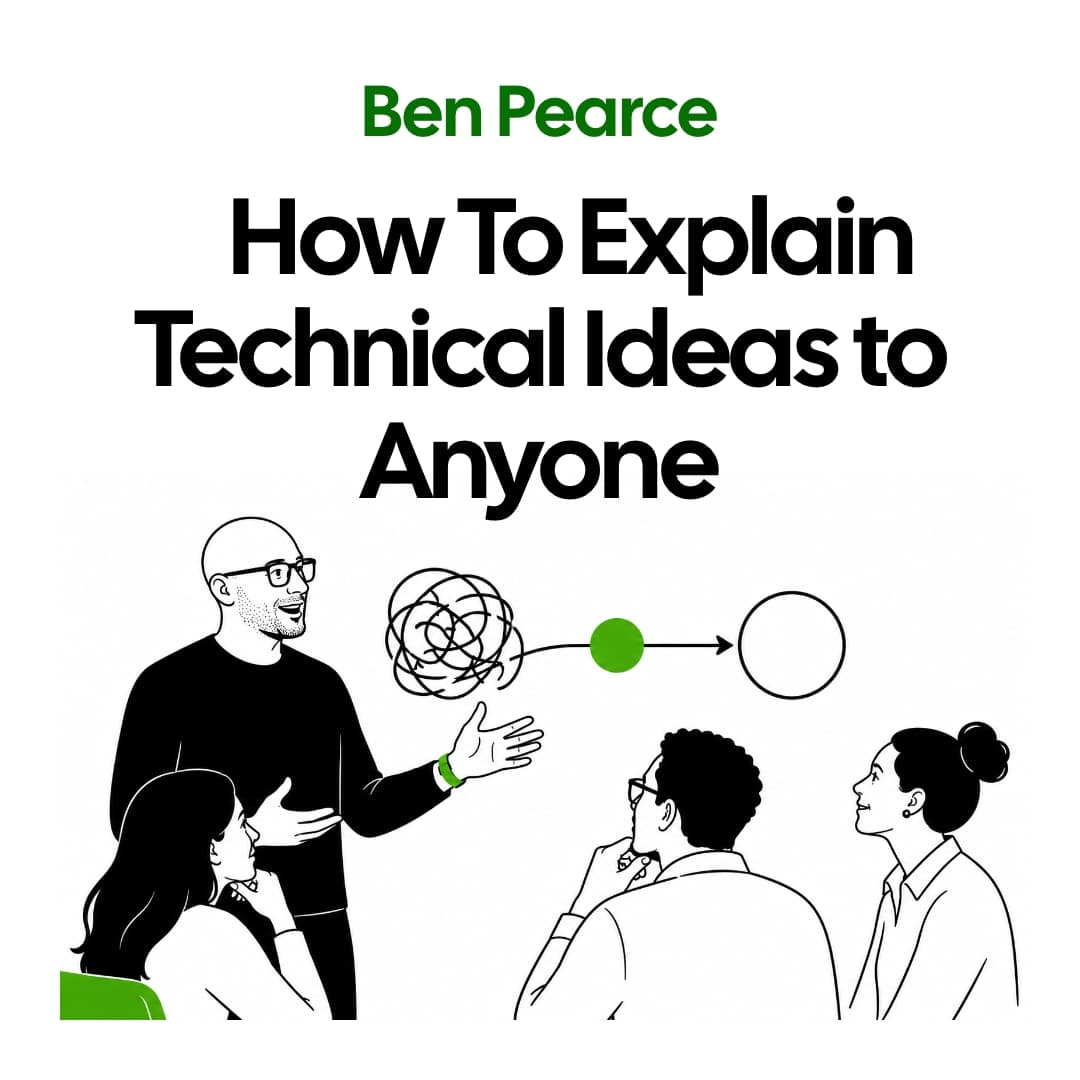
How To Explain Technical Ideas to Anyone
Learn how to explain technical ideas clearly using Ben Pearce’s AOREN framework. A practical guide for engineers and technical leaders to improve communication, influence stakeholders, structure presentations, and drive action.