Read chapter 1
Let’s get this straight from the start: no one is coming to rescue you. We live in a world where you can’t rely on luck, favours, or waiting for someone to notice your hard work. It’s a do-it-yourself world, and your progress depends entirely on your action, not your patience. Your career success won’t happen on its own; you must take complete control.
This is the first advice I give anyone I mentor, and it’s essential to understand. Everything changes once you realise that your future is entirely in your hands. This mindset shift is powerful; it’s the key to unlocking real progress and the rewards that come with it. Success isn’t about clocking hours or just meeting targets. It’s about stepping up, taking ownership, and making yourself indispensable.
You can’t expect promotions or rewards to fall into your lap. You need to make your value visible, advocate for yourself, and take action to get where you want to be. That might mean improving your performance, building relationships, or seeking new opportunities. Sitting back and hoping someone will notice your efforts won’t cut it. It’s about being proactive, showing leadership, and aligning your contributions with what matters to your manager, your team, the company, and the customer.
But it’s not just about your immediate role—finding the right fit matters too. You need a company that resonates with your values, pays you fairly for work that excites you, and lets you make a real impact. Don’t settle for less. If something feels off, don’t just sit back and hope it gets better. Take action to influence change, but know when to move on if your efforts are stifled or unrecognised. Your loyalty should always lie with your career, not any one employer.
Ultimately, your career is yours to build. Success comes when you take ownership, create your own opportunities, and position yourself for growth. When you focus on helping the company and its customers thrive, your career growth will follow naturally. It’s time to stop waiting for permission and start driving your success. Here’s how to do it.
This is a Do-It-Yourself World, and No One Is Coming to Rescue You
If you wait for someone to notice your hard work and hand you a promotion, you’re in for a long wait. Your manager’s job is to hit their targets, not fast-track your career, and they’re often more focused on those who play the game smart.
You become a priority only when your impact is so clear it fuels their success. A good manager might back your growth, but only when your work makes their life easier or drives the team forward. Their support always comes with a catch: it’s about what you do for them.
So, if you want your manager in your corner, ask yourself: “How am I helping them achieve their goals?” The more you align your efforts with what matters to them, the more essential you become to their success. When they follow the same principle up the chain, it eventually leads them to ask the same of you. And when you’re aligned with your customer’s needs, that’s good for business.
Are you quietly doing your job under the radar without making a fuss? That’s the fastest way to be overlooked. You’re the ideal employee. People who get ahead don’t wait for recognition; they make their value stand out. Stop hoping to get noticed. Advocate for yourself, grab opportunities, and put your contributions front and centre.
Practical Steps
Own your stagnation
If you feel stuck, frustrated, or undervalued, it’s up to you to fix it. It’s your responsibility to take charge and solve the problem yourself. If you’re not moving forward, you must make the first move.
Do your job well first
Make sure you’re at least doing your job well—that’s the bare minimum. Anything less is holding you back. Nailing the basics is just the baseline to stay in the game. But don’t expect promotions or raises simply for doing what’s required. Earning your salary is just the foundation, not the end goal. You need more than the basics to truly stand out and move forward.
Set your own goals
Don’t rely on annual reviews to shape your future. Define clear goals for one, three, and five years; longer, even. Have targets, create a roadmap and track your progress. Soon, you’ll see that company processes are less important than your self-driven growth.
Separate your goals from your company’s
Your job is a temporary arrangement between you and your company, and it will eventually end—one way or another. It’s just a stop on your longer-term journey toward your goals; your career is yours to control. While you're in the role, give it everything you’ve got, but never forget that your true loyalty lies with your career, not the company. Stay focused, stay ready, and always be prepared to move forward when the time is right. Keep control, and don’t let anyone else steer your future.
Have a bias for action
Relying on your company to shape your career is like waiting at a bus stop for half an hour when you could walk to your destination in 20 minutes. The longer you stand still, the more ground you lose. Don’t let your career hinge on someone else’s timeline. Take control—develop new skills, seek out projects, and make your next move happen sooner. The more proactive you are, the quicker you’ll reach your goals.
Advocate for yourself
Don’t assume anyone else is pushing for your promotion. Take the lead—schedule meetings to discuss your progress and be explicit about your achievements and what you want.
Make your value visible
Hard work means nothing if no one knows about it. Share your accomplishments widely and tie them to the company’s objectives. You need visibility to progress.
Self-advocate without appearing self-serving
Balancing self-advocacy with a team-first mindset makes you stand out as a leader who can elevate yourself and the group. It’s not about downplaying your work but framing it as part of the bigger picture. Instead of saying, “I completed this project,” try, “The team delivered this successfully, and I handled [specific aspect].” It keeps the focus on team goals while making your contribution clear. This approach builds trust and shows you drive results without undermining others.
Stay a team player
As you push for more responsibility or a promotion, your colleagues must still see you as part of the team, not as someone overshadowing them. Acknowledge their efforts and share success to build collaboration and trust. This keeps you connected to the team and prevents friction. When done well, it shows you can lead without alienating others, positioning you as leadership material.
Create your own opportunities
Take on new projects, fix inefficiencies, or step into leadership gaps. When you create value, you make yourself indispensable.
Always have an exit plan
Never assume your position is secure or permanent. Keep your CV current, nurture your network, and be aware of new opportunities. If your growth stagnates, be ready to make a move.
My family wasn’t exactly struggling when I was growing up, but there was always more month than money. I knew early on that I didn’t want to live like that. The problem? I had zero discipline to change anything, no close role models, and no real targets other than wishes. I didn’t even land my first “proper” job until I was 23, and I hated every minute. I was stuck as an admin clerk in an insurance office, spending my days battling staplers, photocopiers, and endless stacks of paper. That wouldn’t cut it for me—I knew I wanted to earn more, and shuffling paperwork wouldn’t get me there. I fantasised about “being rich” and driving a Bentley. I probably had a stupid idea about having a swimming pool, too. This was no more than pie-in-the-sky daydreaming.
One thing I did realise was that my manager wouldn’t drive it for me. Even if they could, it’d be to a slightly more senior admin clerk in three years. I knew it was on me to change things. I needed a plan.
I often overheard the consultants chatting about tax rules for company pensions, and they didn’t know all the answers. So, I privately took it upon myself to write to HMRC (our tax body) and request a copy of “The Income and Corporation Taxes Act” (because that’s what people do for fun, right?). A week later, a massive envelope containing an inch-thick book landed on my doorstep. I dove into it and learned it cover to cover. It was so dull.
The next time I overheard a few of them discussing corporate pension tax rules, I told them exactly how their clients could contribute tax-efficiently to their schemes. They looked at me like I had two heads. Of course, they didn’t believe the bloke doing the filing, but I must’ve been convincing enough because they went to double-check—and I was right. They ended up closing some big deals off the back of that conversation. I became a go-to source of information.
A few months later, one of those consultants left. By this point, I’d earned a reputation for knowing my stuff, so the office manager offered me a junior consultant role—with a company car, no less! Within a year, I was the top consultant in the country from time to time.
Fast forward ten years, and I found myself running marketing across Europe for a well-known investment bank, earning way more than my 23-year-old self could have dreamed. I’ll be honest—although I was doing a decent job, I had no clue what I was doing half the time. I was self-taught and dealt with subjects beyond my experience or comprehension. I just powered through on sheer energy and learned a lot as I went. Eventually, it all caught up with me, and—realising I was out of my depth—I quit at 32 to teach myself how to code.
Why am I telling you this? Because it’s about setting audacious goals and being blind to all the reasons you can’t achieve them. I might not have had any specific goals, but I knew roughly where I wanted to be. I did everything I could, every day, to move towards them. They consumed me. It doesn’t matter whether I achieved those goals or not. If I hadn’t gotten my act together, I’d probably still be stuck in that insurance office, hating every minute. You can do the same—set your sights on what you want, and you’ll be surprised by what you can make happen.
You Won’t Get Promoted on Potential Alone
Loyalty, time served, or potential won’t get you promoted—results will. Too many expect a promotion because they’ve been around long enough or have a great relationship with their manager. However, promotions are awarded based on proven ability, not trust, hope, or potential. Managers promote those who are already performing at the next level.
If you wait for the title before acting like the next level up, you do it backwards. You must show you’re ready for the role by taking on more significant challenges, solving problems, and proving you can handle more responsibility. Only then will you be seen as the natural choice for promotion.
Practical Steps
Act like you already have the job
Start leading projects, taking on more responsibilities, and solving complex problems. Show leadership now, even before the promotion comes.
Seek specific feedback
Ask your manager what steps to take to reach the next level. Get clear, actionable advice, and follow through on it.
Document your contributions
Record everything you’re doing to operate at the next level. This evidence will help when you make your case for promotion.
How To Get Promoted
Getting promoted isn’t about loyalty, putting in long hours, or simply showing up to do your job. Meeting expectations might make you reliable, but it won’t make you promotable. If you want to move up, you must go beyond your current role and make an impact where you can—not just keep things ticking over. You can’t wait for someone to notice—you have to own the path to promotion and build momentum towards it.
The key? Start acting like the person who already deserves the next title. When you’re already operating at the next level, a promotion becomes recognition, not a request.
There are six key factors to make that happen:
1: Nail your current role
Consistently deliver high-quality work and find ways to add value. Aim to make your performance a given. If you only do what’s required, no one will think you’re ready for more. Every task, project and challenge is an opportunity to show you’re more than capable. Never say, “That’s not my job.” Instead, look for ways to step up and solve problems.
2: Show how you are already operating at the next level
Promotion isn’t given to people for potential—it’s earned by those already proving they can handle the next level. Consider and embody the skills, responsibilities, and leadership qualities expected at that level. That means taking on tasks, duties, and decision-making that align with the next role. The goal is to make it evident to your manager that you’re already there. They shouldn’t have to take a risk—they’re just formalising what you’re already doing.
3: Build your reputation
Reputation matters more than you think. It’s not only about who you know—it’s about who knows you. A strong reputation gets you noticed when opportunities come up. Consistently delivering results, being reliable, and showing initiative build trust and recognition among colleagues and leaders. Think of it as building your personal brand. Your work is your advertisement.
4: Manage up effectively
Promotions often come down to how well you support your manager’s success. Show genuine interest in their priorities and find ways to help them achieve those goals. Make their life easier by keeping them informed, showing initiative, and demonstrating that you understand the bigger picture.
Managers want people who make their job smoother and strengthen the team around them. By actively aligning with their objectives, you’re proving you can lead from within and that you’re someone they can depend on.
When you make their job easier and show you’re invested in their success, they’ll see you as a capable, trustworthy leader in the making.
5: Be ready when the time’s right
Promotions don't happen when you feel ready—they happen when the company has a need. You may have all the skills, but you'll be waiting if there's no opening. That's why it's crucial to keep performing at the next level. If a spot opens and you're already operating at that level, you'll be the natural choice. Otherwise, they'll find someone else or hire from outside. Being prepared means you can always step up when the opportunity arises.
6: Start preparing early
Don’t wait for a performance review or job posting to start your promotion plan. Document your wins, collect feedback, and let people know what you’re achieving. Share results, not just activities. This way, when the opportunity comes up, your contributions are fresh and visible in everyone’s mind. Promotion is a long game—small, consistent wins over time build a case that’s hard to ignore.
While other factors may be in play, it usually comes down to these six steps. This approach works far better than saying, “I want a promotion.” Asking outright puts your manager in a difficult position. Chances are, there’s no open slot unless the timing happens to be perfect. They might not have considered you for the role, especially if you’re not already on their radar or haven’t demonstrated your value. Following these steps makes it easier for your manager to see you as someone they want to retain and reward.
If you’re serious about reaching the next level, define it clearly. Start by checking your department’s career ladder, where you’ll often find specifics on the next level. Look for any resources the company provides describing generic attributes required for each level company-wide. Understand what skills, behaviours, and achievements it needs, then find ways to model these in your performance. You can’t operate at the next level if you don’t know what it is. Aligning with this target allows you to make intentional adjustments in your work, showing you’re ready without needing to say a word.
Consistently demonstrate your value, even if there’s no open position. Start building your case by highlighting your achievements, showing that you’re already performing at the next level, and making your impact hard to overlook. Share this progress with your manager to show you’re serious about moving up. Be explicit that you’re preparing yourself for the next step, making it clear that you’re ready. If your case doesn’t feel solid, identify the gaps. Create a plan to address these areas and share it with your manager. Then, follow through and build your case until it’s undeniable. This approach puts you in control and makes it easier for your manager to advocate for you. If they don’t know what you’re aiming for or what you’ve achieved, someone else will be next in line when the opportunity opens.
Remember, soft skills matter just as much as performance. Building relationships, staying disciplined, and cultivating allies are essential to success. It’s about doing the work and becoming indispensable to the team. Make your impact obvious by tackling meaningful challenges, finding champions to support you, and showing how you contribute to the company’s growth. Actions speak louder than simply asking for a promotion. We’ll dive deeper into these aspects later.
Your manager can unlock your promotion, but their peers can block it. Managing up effectively and building a solid reputation across the company makes it easier for your manager to advocate for you. I’ve seen cases where a manager champions a direct report for promotion, only for their peers to push back. This doesn’t just affect you—it reflects poorly on your manager. By following these steps, you make it clear to your manager’s peers that you’re the natural choice for the role.
Putting yourself forward doesn’t guarantee an instant yes. Most promotions happen during review cycles unless there’s an urgent need. If you’re turned down, don’t be discouraged—the conversation has started, and you’re now on the radar. Don’t wait for the perfect moment or hope that someone will notice. Take control. If it doesn’t happen immediately, refine your case, close gaps, and prepare for the next opportunity. Always be ready.
If you’ve done everything and the path to promotion remains blocked, don’t be afraid to explore options elsewhere. Sometimes, moving forward means moving to a new company. We’ll discuss how to handle this in more detail later.
Practical Steps
Start performing at the next level
Don’t wait for a promotion to start showing you’ve earned it. Go to your department’s career ladder and company resources to get a clear picture of what’s required at the next level, then start operating there. Take on responsibilities beyond your current role, lead projects, and show initiative. Avoid the mindset of “That’s not my job” or “I’m not paid to do that.” Leaders reward those already demonstrating the qualities needed at a higher level, not those waiting for a title change.
Build consistency and discipline
Promotions are based on sustained performance, not occasional flashes of brilliance. Be disciplined in your work habits, stay focused, and consistently improve. Proven, reliable performance over time gets noticed and is far more compelling than a one-time success.
Make career growth a constant conversation
Don’t wait for your annual review to discuss your progress. Schedule regular check-ins with your manager, ask for feedback, and keep your career growth on their radar. These conversations keep you visible and position you as someone serious about advancement.
Write and share your promotion case
Document your achievements, especially those showing you’re already performing at the next level. Use precise examples and data to demonstrate your impact. Share these wins with your manager regularly. A well-crafted promotion case makes it easier for your manager to advocate for your advancement when the time comes.
Be explicit with your intentions
Let your manager know you’re aiming for the next level and actively preparing for it. Make it clear that you’re focused on growth and ready to take on more responsibility when the opportunity arises.
Focus conversations on contribution
Rather than directly asking for a promotion, focus on how you can add more value. Ask questions like, “What can I do to contribute more?” This approach highlights your initiative and positions you for natural recognition and promotion without the awkwardness of asking outright.
Build a network of allies
Strong relationships are essential. Seek mentors and allies who can guide and support you. Networking within the company builds trust with senior leaders and raises your profile, increasing your chances of being considered for promotion. Make sure your reputation is solid and your contributions are known so it’s easy for your manager to advocate for you among their peers.
Track and share your wins
Record your achievements as you go and keep your manager updated. When promotion discussions arise, documenting your impact strengthens your case and makes it hard to overlook.
Seek clear feedback and close gaps
Don’t assume you know what’s holding you back. Ask for specific feedback on areas for improvement and actively work to close those gaps. This positions you as someone committed to growth and ready for the next level.
Support your manager’s success
Help your manager achieve their goals and align your work with their priorities. Managers who see you contributing to their success are more likely to support your career growth and advocate for your promotion.
Find Your Place, but Don’t Settle for Less
I urge you to find a company that resonates with you—a place where you can contribute to something bigger, be paid fairly for work you love, be surrounded by people you like, and help the business grow by making the customer happy. When these things align, it feels great.
But if something feels off, don’t just sit back and hope things will improve. And don’t run at the first sign of trouble, either. Start by asking how you can influence change around you. It’s easy to think, “Someone else will handle it” or “That’s out of my reach.” But that mindset holds you and the company back. Great companies thrive when people step up and make a difference, no matter their role.
You’re closer to leadership in smaller companies, and your voice carries more weight. You have a real shot at shaping your role and even the direction of the business. If something isn’t working—whether it’s a broken process, a cultural issue, or an idea to serve customers better—it’s on you to act. You can influence how teams collaborate, improve decision-making, or find better ways to deliver client value.
You can still create an impact even in larger companies where influence feels more unlikely. Focus on building a standout team or department. Make it a pocket of excellence that gets noticed. A high-performing, cohesive team will build your reputation and expand your influence. People will start talking about what you’re achieving, and soon enough, your impact will spread beyond your immediate circle.
You might not be able to change the whole company, but you can build momentum by leading by example and driving change where possible. Over time, your influence grows. You set the tone for what’s possible; that energy can ripple across the business.
If you’ve done what you can and nothing’s shifting—if you’ve pushed for positive change and hit a wall of bureaucracy or resistance—it’s time to move on. A higher salary won’t fix deeper misalignments or compensate for a poor culture fit. Don’t stay out of misplaced loyalty.
Find a company that truly values what you bring, where your contributions make a difference, and where the culture aligns with your values.
Don’t settle for less.
Practical Steps
Assess your alignment with the company
Are you doing work you love? Are you paid fairly? Do you connect with the company’s mission? Do you enjoy working with your colleagues, and are you helping to delight customers? If not, pinpoint what’s missing and see if you can drive change.
Identify areas for change
Look for ways to improve your team or department—processes, culture, or customer service. If you see an issue, don’t wait. Take responsibility, develop solutions, and present them to leadership, backed by clear outcomes.
Start local
Create positive change within your immediate team. Focus on improving collaboration, decision-making, and efficiency. Lead by example, and let your influence spread.
Build a standout team
Make your team a pocket of excellence. Deliver solid results and foster a supportive, cohesive environment. Your success will get noticed, extending your influence across the company.
Push for broader influence in smaller companies
You’re closer to leadership in smaller companies, so use that to drive changes—whether in culture, strategy, or customer service. Be proactive in shaping the company’s direction.
Gauge broader impact in larger companies
In larger organisations, focus on local success. Build your reputation through small wins and long-term impact. As your team’s success grows, your influence will spread.
Know when to move on
Don't stay out of loyalty if your efforts to create change are blocked or unappreciated. Recognise when it’s time to seek new opportunities where your impact will be valued.
Loyalty Is a One-Way Street in Business
Love your company by all means, but don’t expect it to love you back. No matter how dedicated you are, your loyalty and hard work won’t guarantee your job when times get tough. Companies will always act in their best interests; even the most committed employees can find themselves on the chopping block when the pressure is on.
Businesses make decisions based on financial priorities, not personal relationships. Therefore, your primary loyalty should be to your career, not your employer. Focus on developing your skills, building your network, and keeping your options open. Your career is a long game; you must be your best advocate.
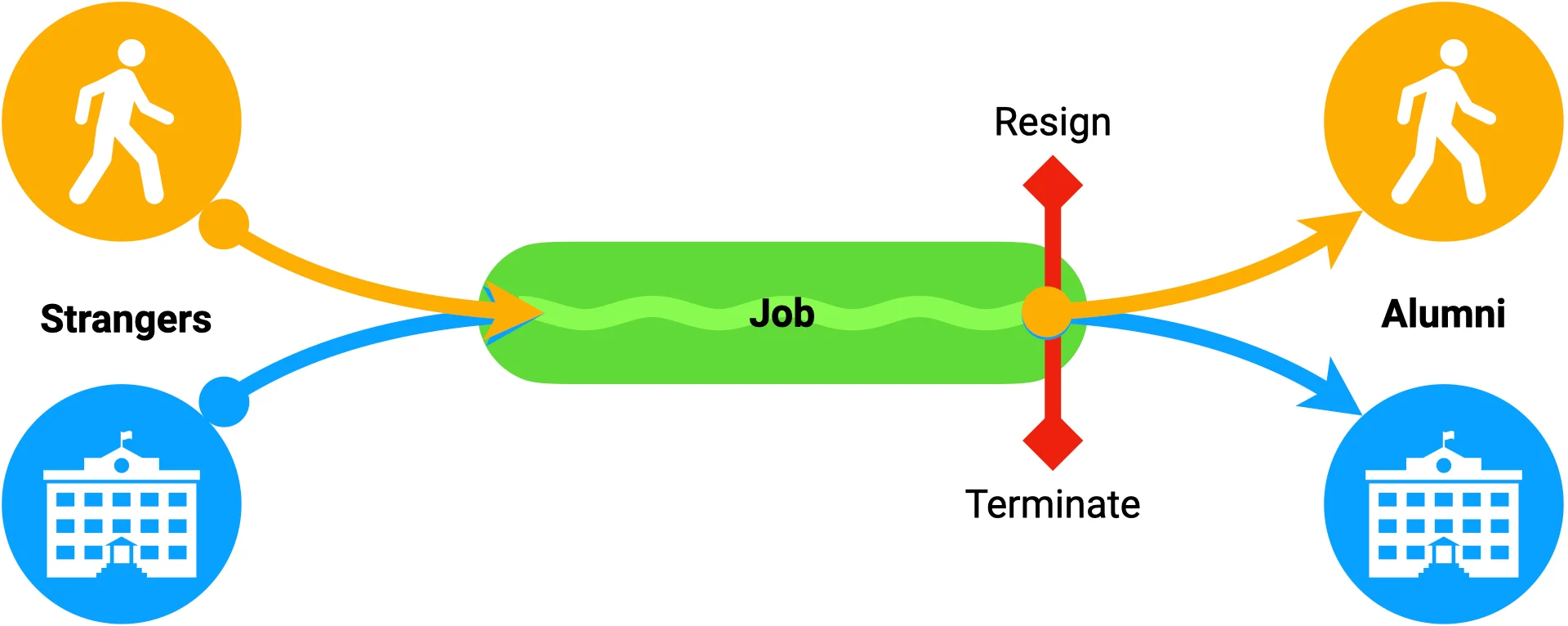
Always keep in mind that your job is temporary. Before you joined the company, you were just a stranger, and after a few interviews and signing a contract, you became an employee. But that contract will end one day—I promise. Either you’ll move on to another company, or they’ll move on from you, whether due to performance, restructuring or simply because they no longer need your role. No matter how secure it feels, never view your relationship with your employer as permanent. They don’t.
And when the time comes to leave, don’t overthink it—it’s no big deal. Deciding to move on is just part of the natural progression of your career. Companies understand this, and you should, too. Leaving for better opportunities, growth, or simply a change of pace is expected. Your loyalty should be to your career, not to any one employer.
Practical Steps
Stay loyal to your career
Your career comes first, always. If your company isn’t driving your growth, it’s time to rethink your options. Staying where your ambitions don’t match the company’s path will only hold you back.
Never stop networking
Your network is one of your most valuable assets. Even if you’re happy in your role, keep building connections. Future opportunities often come from people you know, so stay active on LinkedIn, attend industry events, and maintain relationships with past colleagues.
Know your value
Stay informed about industry salary standards and ensure you’re paid what you’re worth. If your company underpays you, it’s up to you to seek better compensation elsewhere.
Be interview-ready
Even if you’re not currently looking for a new job, keep your CV updated and your interview skills sharp. Opportunities can arise unexpectedly, and being prepared means you won’t miss them when they do.
Know when it’s time to leave
Don't hesitate to explore other roles when growth stalls and loyalty isn’t reciprocated. Stay focused on your long-term career goals, and be willing to move on when the company no longer supports your development.
Stop Waiting for Empty Promises
Too often, people are strung along with promises of raises or promotions that never materialise. They’re told “next quarter” or “next time,” only to see those goalposts move again. If your company isn’t delivering, you’re being kept in place with empty promises.
From a management perspective, I’ve seen how these decisions get delayed. It’s often a tactic to save money and prioritise only the highest-value (sometimes noisiest) cases. The people who move ahead aren’t the ones who accept vague assurances—they’re the ones who push for clarity, demand timelines, and take action when promises fall short.
If your company doesn’t provide that clarity, you must create it yourself. Take control and make your break.
Practical Steps
Ask for specifics
Don’t leave any conversation about raises or promotions until you have clear timelines and measurable criteria. Ask, “What exactly do I need to achieve, and by when?”
Set your deadlines
Start a new conversation if the company doesn’t deliver by the agreed date. If nothing changes, don’t hesitate to explore other opportunities. Don’t stay stuck waiting for promises that never materialise.
Always have a Plan B
Even if you’re happy in your role, keep your options open. Network regularly, update your CV, and stay informed about opportunities outside your company. Be ready to move on if your employer fails to fulfil promises.
The Customer Always Comes First
They say the customer is always right. Spoiler alert: they’re not. But they are always the most critical part of the business. Every business operates with a simple hierarchy of importance:
1: The customer
The customer is the driving force behind everything. They receive value from your products and services and, in return, provide the revenue that keeps the business alive. They are the core of the company’s vision.
2: The company
The company’s sole purpose is to serve the customer. It exists to create products and services that deliver value and build teams to make this happen, which reflects its mission.
3: Teams
Teams design, build, and maintain the products and services that the company sells. They are the engine driving customer satisfaction and executing the company’s strategy.
4: You and me
Our role is to empower these teams, enabling them to deliver value to the customer. Our success is directly tied to theirs and theirs to the customer. When the customer wins, we all win—this gives us purpose.
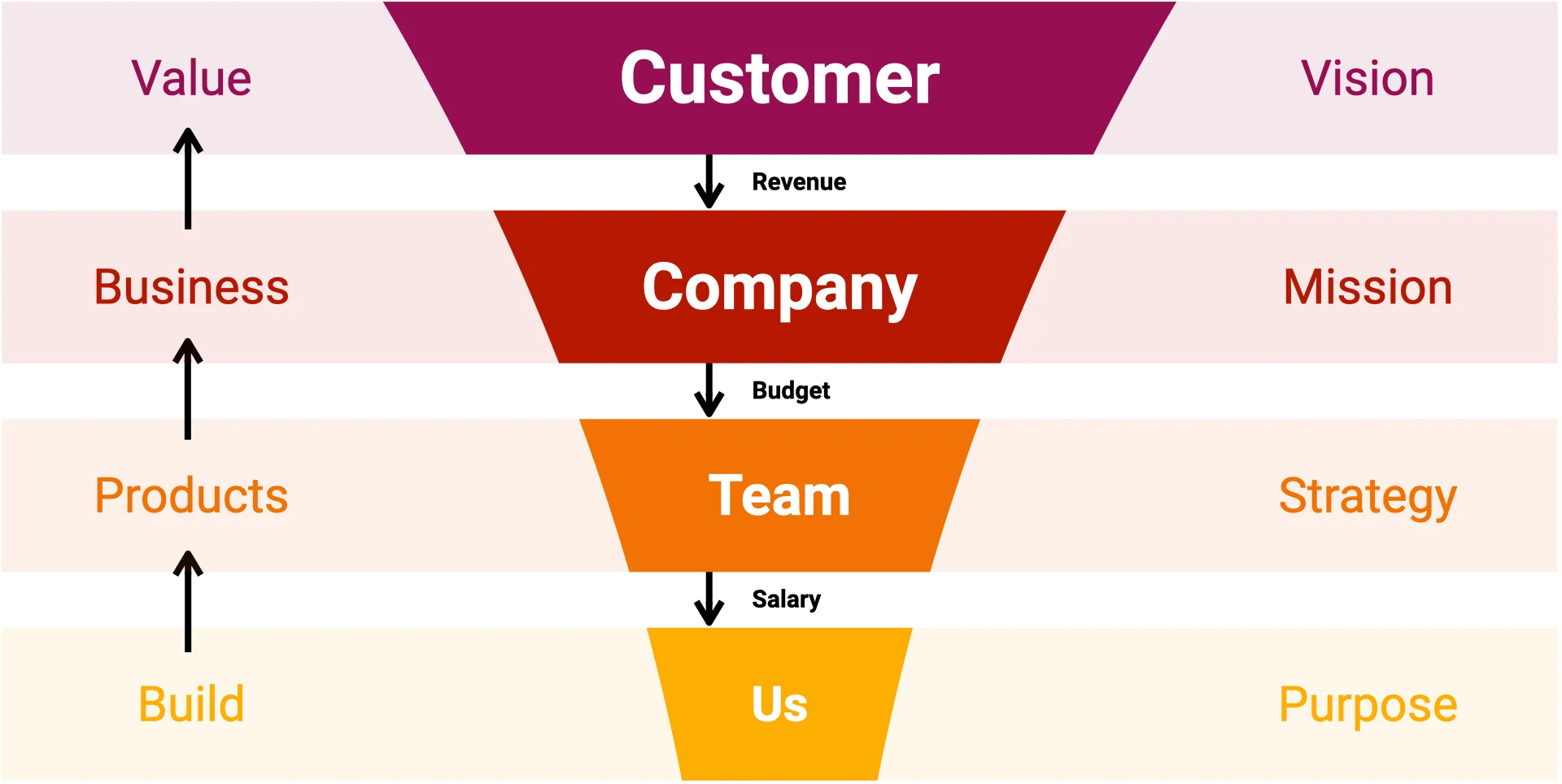
It’s not one-way traffic. When customers love what you deliver, their spending flows back into the company, which funds your team’s budget. And that budget pays your salary. Helping the customer win isn’t just about benefiting the company—it directly impacts your financial success.
A lean, high-performing team means more budget and potentially higher compensation. By delivering value to the customer, you create a clear line to funding that sustains your team, your projects, and your pay. Their success is your success.
When the customer comes first, everything else falls into place. Prioritising yourself over the customer undercuts the company, the team, and the customer experience. The company doesn’t exist to fast-track your career or make you happy—it exists for the customer. When the customer succeeds, the company thrives, and so do your career opportunities.
It’s easy for customer-facing teams like sales, marketing, or support to see the importance of putting the customer first. But it’s just as crucial for internal teams—finance, operations, HR, and technology. No matter your role, your work impacts the customer experience. Putting the customer first isn’t just for the front line—it’s for everyone.
Functional teams play a big part in delivering value to the customer, even if it’s not always obvious. For example, finance ensures invoices are processed smoothly so customers aren’t frustrated by payment issues. Operations make sure products or services are delivered on time. HR builds strong teams that support the customer at every step. Technology keeps systems running, enabling seamless customer interactions.
Every function contributes to ensuring a positive customer experience. By framing your work around the customer’s needs, you contribute to the company’s success, regardless of your department.
Practical Steps
Keep the customer first
Always ask, “How does this benefit or impact the customer?” Let their needs guide your decisions. Whether it’s timely invoicing in finance or reliable systems in tech, focus on how your tasks improve the customer experience and adjust where needed.
Focus on the team
Your success depends on your team’s success. Support them so they can deliver value to the customer.
Stay humble
Understand your place in the hierarchy. The customer comes first; your role is to support that mission.
Summary and Key Takeaways
Your career is yours to drive—no one else will do it for you. Success doesn’t come from waiting around for promotions or hoping hard work gets noticed; it comes from taking charge, pushing yourself forward, and making your impact clear. Promotions aren’t handed out for loyalty or just doing your job—they’re earned by delivering visible results, taking on more responsibility, and showing you’re ready for the next level. It’s about stepping up, demonstrating leadership, and focusing your efforts on what matters most to your manager, team, the company, and the customer.
Advocate for yourself. Don’t expect others to promote your achievements or push for your promotion. Make your contributions visible, ask for feedback, and openly discuss your career goals. Build relationships with people who support you, both in your team and across the company. These connections will help position you for growth.
Finding the right company fit matters just as much. Look for an environment where your values align, where your efforts are appreciated, and where you’re paid fairly for work that challenges and excites you. Don’t settle for less. If something feels off, try to make an impact or drive change. But if your efforts are constantly blocked by bureaucracy or go unrecognised, it may be time to move on. Keep your career moving forward, and remember—your loyalty should be to your future, not just to any one employer.
Success is about creating your own opportunities, supporting your manager and team, and ensuring your work contributes to the bigger picture. When you focus on helping the company and its customers thrive, growth will follow naturally.
Key Takeaways
Take control of your career
You are responsible for your success. Be proactive, push for growth, and create your own opportunities instead of waiting for someone else to take the lead.
Promotions come from results, not just effort
Doing your job well is expected. You earn promotions by consistently delivering at the next level and demonstrating that you can handle greater responsibility.
Find the right fit, change what you can, and don’t settle
Find a company that aligns with your values, pays you fairly, and allows you to make meaningful contributions. If things aren’t working, take action to influence change where possible. But if your efforts are blocked and your contributions remain unappreciated, don’t stay out of loyalty—seek a place to thrive and make a lasting impact.
Align your work with your manager’s goals
Help your manager succeed by understanding what they need to achieve. Your contributions should directly support team goals, making you indispensable.
Seek and create opportunities
Don’t wait for promotions or new roles to be handed to you. Look for ways to improve processes, tackle new projects, and become a key player.
Build a strong network
Cultivate relationships with people who can support your career and advocate for you. Building your network ensures your efforts and achievements are recognised.
Always be prepared to move on
Have an exit plan ready. Keep your CV updated and maintain your network so you can pivot when growth stagnates or promises aren’t kept.
Don’t wait for broken promises
Don't wait around if your company repeatedly fails to deliver on raises or promotions. Take action and be ready to explore other opportunities.
Put the customer first
Every decision should ultimately benefit the customer. When you focus on their success, you contribute to the company’s success—and your own.